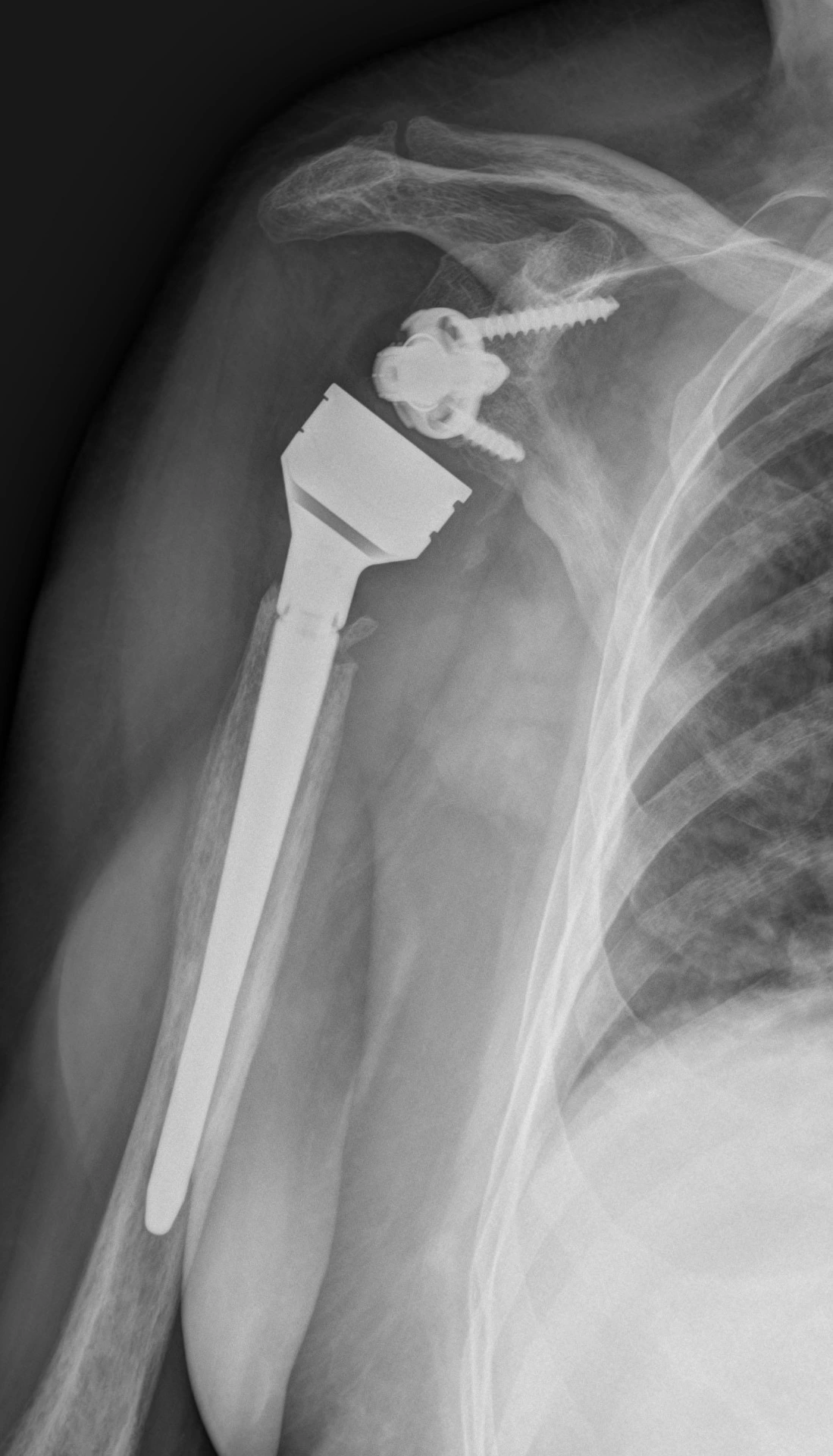
Shoulder
Anatomy and function
The shoulder joint is the most mobile large joint in the human body and only functions thanks to the complex interaction of bones, joint capsule, ligaments, muscles and their tendons.
At the shoulder joint we treat instabilities, bone defects, tendon damage and osteoarthritis.
The most common shoulder surgeries include arthroscopy, reconstruction of bone defects (usually post-traumatic) and tendons, muscle transfer, and implantation of endoprostheses.
Conditions and injuries
Shoulder function depends on the interaction of bones, the joint capsule, ligaments, muscles and tendons. Tendon damage or instability can limit arm movement and strength. Treatment therefore addresses the affected structure as well as the pain.
- Shoulder joint instability
- Rotator cuff and other tendon damage
- Cartilage and bone defects
- Arthritis and changes in joint alignment
Treatment options
Surgical options include arthroscopy, reconstruction of bone and tendon defects, muscle transfers and shoulder joint replacement. Joint-preserving approaches such as alignment correction or cartilage and bone transplantation may be considered in certain cases. When a tendon cannot be directly reconstructed, the linked articles explain alternatives including muscle transfer and superior capsular reconstruction.
Explore individual conditions and procedures
- Irreparable rotator cuff defects and muscle transfers
- Shoulder Joint Realignment as a Therapy Option
- Shoulder instability and bony reconstructions
- Shoulder joint replacement
- Shoulder: Cartilage and bone transplants in the shoulder
- Shoulder: Irreparable supraspinatus ruptures and superior capsular reconstruction
- Shoulder: Muscle transfers as an alternative to joint replacement
Do you have symptoms and want to discuss treatment?
Contact the practice of Univ.-Prof. Dr. Hart. The treatment approach is selected according to your findings and individual needs.
Arrange a consultation